FishEye: Prix Polyptyque : récits photographiques entre errances et queerness

Jusqu’au 25 février, découvrez les lauréat·es du Prix Polyptyque, visant à mettre à l’honneur la scène photographique marseillaise. Julia Gat, Andrea Graziosi et le duo Jeanne et Moreau remportent cette édition, chacun·e exprimant un rapport aux identités et aux cultures du Sud, traversées de mysticisme, queerness et récits intimes.

Fondé en 2018, le Prix Polyptyque entend témoigner de la richesse de la scène photographique marseillaise et de la Région Sud. Organisé par le Centre Photographique de Marseille à l’occasion du salon éponyme, ce prix sonde les tendances visuelles actuelles et révèlent des langages artistiques novateurs, riches et ouverts sur le monde. Par le choix de ses artistes, Polyptyque donne libre cours à des visions du monde queers, défiant les normes et poussant le médium dans ses retranchements. L’été dernier, ce sont onze artistes locaux qui ont été exposé·es à Marseille. Et parmi elleux, trois lauréat·es ont été désigné·es : Julia Gat, Andrea Graziosi et le duo Jeanne et Moreau. Des artistes dont les œuvres sont désormais accrochées à la galerie Sit Down à Paris, partenaire de cette cinquième édition.

Chacun·e de ces photographes exprime à sa manière une relation intime, charnelle et politique avec le sud, tantôt par le récit des diasporas et des errances, tantôt par le mysticisme et les histoires familiales. Ainsi, Julia Gat crée une narration photographique à travers des images de son quotidien. Les paysages méditerranéens croisent les membres de sa famille et accompagnent ce récit autobiographique subtil, témoignage d’un passage entre enfance et âge adulte.  Andrea Graziosi, quant à lui, explore la Sardaigne profonde à travers ses rituels ancestraux et ses mystères. Dans Animas, il tire le portrait des masques traditionnels d’animaux utilisés par les habitant·es de la Barbagia lors d’anciens cultes à la croisée de l’humain et de ce que la nature a de plus brutal.

Jeanne et Moreau : archive d’une histoire d’amour

Outre les travaux de Julia Gat et d’Andrea Graziosi, l’exposition nous plonge dans l’univers captivant de Jeanne et Moreau, qui donnent libre cours à leurs identités, et à une relation vécue à distance, entre moult errances et bouquets de fleurs. Dans Will you be angry at me if I keep bleeding each time, le couple de photographes sonde leur expérience de la queerness en replongeant dans leur propre histoire d’amour. Un travail accompagnant leur couple en temps réel depuis 2018, et questionnant le rapport qu’iels entretiennent aux technologies numériques, à la photographie et au contexte de transmission et de production des images. En fouillant dans cette banque de photographies communes, tous·tes deux s’interrogent sur les liens qui rendent l’intime politique et abordent l’épineux sujet de la place des artistes queers dans les arts. Mais ce projet au long cours se lit aussi comme une quête de place dans le monde après que l’explosion du port de Beyrouth en 2020 a ravagé leur maison. Sans domicile fixe, iels commencent à immortaliser les bouquets de fleurs improvisés qui ornent leurs espaces de vie éphémères. Des compositions évoquant à la fois des memento mori et des métronomes rappelant leur permanence dans un lieu. Un album photographique réunissant l’archive d’un amour, mais aussi celle d’une pérégrination, d’une errance faite d’instants flottants et de souvenirs sans cesse renouvelés.
The Eyes Artist Talk Paris Photo 2022 (FR)

THE ARTIST TALKS BY THE EYES 2022

Conçus et animés depuis 2016 par l’équipe de The Eyes en collaboration avec Paris Photo. Les Artist Talks by The Eyes mettent en perspective la relation de l’artiste avec le livre dans sa pratique artistique, son approche et sa réalisation éditoriale.

La programmation des Artist Talks by The Eyes est réalisée et animée par Emilie Lauriola, librairie spécialisée en photographie,  Marc Feustel, auteur et commissaire indépendant, Pascale Obolo, Commissaire d’exposition indépendante, Directrice de l’African Art Book Fair et Véronique Prugnaud, Co-directrice de The Eyes.

VOIR LE REPLAY DE JULIA GAT – ACTES SUD 

The Guardian - I’ll be my mirror: sizzling self-portraits – in pictures

Marriage, injury, anxiety and grief are all explored in the these stunning images from the Mirror of Self exhibition at PhotoBrussels festival

Mee-Lai Stone

@mlestone

Thu 19 Jan 2023 07.00 GMT

Sara, France, 2011, from the series Khamsa khamsa khamsa, 2012-2022

This series is the result of a 20-year process, begun by Julia Gat at the age of 14. Gat tells the story of her childhood and adolescence, growing up alongside her two brothers and two sisters. It is a visual autobiographical narrative in the form of a family archive. Her mother used to say ‘the archive keeps that world we lived in as a real place, which otherwise could be easily mistaken for a dream’

Fonk: Fotografen Julia Gat, Florian Braakman en Bram Petraeus winnen Stipendium en tentoonstelling

Na eerdere edities, waarbij onder anderen Cigdem Yuksel , Sander van Wettum en Sanne Donders de stad Schiedam via hun fotografisch werk verkenden, is het ditmaal de beurt aan Julia Gat, Florian Braakman en Bram Petraeus. De prijs bestaat sinds 2020 en is een initiatief van Cultureel Forum Schiedam. Nieuw is dat de winnaars dit jaar hun werk tonen in het Stedelijk Museum Schiedam.

Van 14 januari t/m 6 maart 2023 is de tentoonstelling te zien in de nieuwe Stadsgalerij van het museum.

Fotoexpositie : Stipendium Schiedams Water

Drie jonge fotografen hebben het Stipendium Schiedams Water 2022 gewonnen; een jaarlijkse prijs die drie fotografen in staat stelt om de sociale transitie van Schiedam te verbeelden. Na eerdere edities, waarbij onder andere Cigdem Yüksel , Sander van Wettum en Sanne Donders de stad Schiedam via hun fotografisch werk verkenden, is het ditmaal de beurt aan Julia Gat, Florian Braakman en Bram Petraeus. De prijs bestaat sinds 2020 en is een initiatief van Cultureel Forum Schiedam. Nieuw is dat de winnaars dit jaar hun werk tonen in het Stedelijk Museum Schiedam in de nieuwe Stadsgalerij van het museum.

Al eeuwenlang volgen vele economische en sociale transities in Schiedam elkaar in rap tempo op. Of het nu gaat om opkomende en verdwijnende industrieën, voortdurende migratiestromen, handel over zee of met het achterland of de grote stadsuitbreidingen aan de noordrand van de stad. Geen grote maatschappelijke omwenteling gaat aan de voormalige jeneverstad voorbij. Recent ziet Schiedam bijvoorbeeld een grote instroom van nieuwkomers, namelijk voormalige inwoners van grote steden in de Randstad die er een woning vinden. Het Stipendium Schiedams Water wil deze sociale transities vastleggen. De opdracht is - behalve het onderwerp - verder vrij van vorm. De drie fotografen mogen naar eigen inzicht een fotografisch verhaal maken over veranderingen die zij waarnemen in de stad. Ondanks de verscheidenheid in ontwikkelingen die zij verbeelden, is er elk jaar weer een gemene deler. Dit jaar gaat het werk bij alle drie de fotografen over diversiteit, verbinden, wortelen, beeldvorming, trots, bewustwording en kracht. Soms gezien vanuit een persoonlijk perspectief op verandering, om zo een deur te openen naar bredere maatschappelijke transitie.

Julia Gat (Israël, 1997) woont en werkt in Rotterdam en Marseille. Ze studeerde kunst en geesteswetenschappen aan de Open Universiteit in het Verenigd Koninkrijk. Daarna volgde zij kunstopleidingen aan de Willen de Kooning Academie in Rotterdam en The School of Visual Arts in New York. Ze fotografeert en maakt ook video's. Haar werk varieert van documentaires tot portretvideokunst, waarbij ze op zoek gaat naar interactie tussen mensen. Ze heeft diverse prijzen voor haar werk gekregen, zoals de Steenbergen Stipendium Publieksprijs 2021, de ISEM Young Photographer in 2020 en de Franse Prix Polyptyque in 2022.

Florian Braakman (Nederland, 1988) studeerde in 2013 af aan de Koninklijke Academie voor Beeldende Kunsten in Den Haag, afdeling fotografie. Vervolgens verhuisde hij naar Rotterdam-Delfshaven, de wijk die hij sindsdien continu fotografeert. Uit fascinatie voor de multiculturele samenleving van Rotterdam West besluit hij voor zijn project Delfshaven's Finest (2013- heden) zijn medebuurtbewoners te fotograferen. Met de serie Broer (2017-heden) brengt hij de straatcultuur in beeld en voor de dia-installatie In Between Homes (2017-heden) reist Braakman met buurtbewoners naar hun vaderland.

Bram Petraeus (Nederland, 1987) studeerde Fotonica in Ede. Hij woont in Amsterdam en werkt onder meer voor NRC Handelsblad, dagblad Trouw en het UWV. Hij wordt vertegenwoordigd door Hollandse Hoogte en ANP. Petraeus won diverse prijzen, zoals De Zilveren Camera in 2022 (1e prijs in de categorie Kunst, cultuur en entertainment) en 2017 (3e prijs in de categorie Nationaal Nieuws). Ook was hij finalist voor de Brussels Street Photography Contest (2017).


DeSchiedammer Online: Drie fotografen van buitenaf laten Schiedam aan Schiedammers zien

SCHIEDAM - In het Stedelijk Museum Schiedam heeft aan het eind van de middag de officiële opening van de fototoonstelling 'Stipendium Schiedams Water 2022' plaatsgevonden. De tentoonstelling is met ingang van morgen te zien. Je ziet het werk van de drie winnaars van het stipendium: Julia Gat, Florian Braakman en Bram Petraeus.

door Jan Schrijver (foto's door Louise Melchers)

'Stipendium Schiedams Water' wordt georganiseerd door het Cultureel Forum Schiedam (CFS). In 2020 vond de eerste editie plaats. Voor de nu gehouden derde editie had een dertigtal fotografen zich kandidaat gesteld. De jury bestaat uit Anne de Haij (directeur Stedelijk Museum Schiedam); Rebecca Simons (fotografie curator en docent aan de Willem de Kooning Academie) en Reyn van der Lugt (kunstverzamelaar en voormalig directeur Groninger Museum). Het drietal juryleden koos uit de longlist van dertig fotografen drie fotografen die het stipendium kregen, een soort 'toelage' waarmee het drietal in de gelegenheid werd gesteld de opdracht uit te voeren 'de sociale transitie van de stad zichtbaar te maken'. De opdracht is – behalve dat genoemd thema moet worden aangehouden – verder vrij van vorm. De drie fotografen mogen naar eigen inzicht een fotografisch verhaal maken over veranderingen die zij waarnemen in de stad.

Hoe de winnaars van het stipendium - Julia Gat, Florian Braakman en Bram Petraeus - dat gedaan hebben, is tot en met 5 maart 2023 te zien in de Stadsgalerij van het Stedelijk Museum Schiedam. Julia Gat (Israël, 1997) woont en werkt in Rotterdam en Marseille. Florian Braakman (Nederland, 1988) studeerde in 2013 af aan de Koninklijke Academie voor Beeldende Kunsten in Den Haag, afdeling fotografie. Hij woont in Delfshaven. Bram Petraeus (Nederland, 1987) studeerde Fotonica in Ede. Hij woont in Amsterdam en werkt als fotojournalist onder meer voor NRC Handelsblad en dagblad Trouw. Zo maakte hij vandaag de foto van Gert-Jan Segers voor het NRC-artikel over het opstappen van de CU-leider. Hij won reeds tweemaal De Zilveren Camera. 

"Het mooie is dat zij - fotografen die nog nooit in Schiedam geweest zijn - ons Schiedam en de Schiedammers met andere ogen laten zien. Zij zijn nieuwkomers die onze ogen openen, ze laten ons dingen zien waaraan we in ons dagelijks leven voorbijgaan zonder ze echt op te merken. Je ziet hun reflectie op Schiedam en Schiedammers. Bezoekers van de tentoonstelling leren niet alleen het werk van de drie fotografen kennen, maar ze leren ook Schiedam en de Schiedammers beter kennen. Daarom past deze expositie zo goed in onze nieuwe Stadsgalerij", zei museumdirecteur Anne de Haij. CFS-bestuurslid Maarten Mulder merkte in zijn speech op dat het in 1961 door de bekende kunstverzamelaar Piet Sanders opgerichte CFS wel eens eerder activiteiten in het museum heeft ontplooid, maar dat er nu voor het eerst in samenwerking met het museum een tentoonstelling is georganiseerd. Na de woorden van De Haij en Sanders, stelde CFS-bestuurslid Annemarie Souer de drie fotografen aan het publiek door middel van een mini-interview voor.

Florian Braakman is vooral gaan struinen door Schiedam, zegt hij. Zo is hij ooit met fotografie begonnen en zo gaat hij in een vrije opdracht als deze graag te werk. Als struinend komt hij in contact met mensen. Als hij ze beter leert kennen, komt hij in verbinding, ontstaat er een vertrouwensband en kan hij een beter portret maken. Tijdens zijn tocht door Schiedam - zeven dagen lang zwierf hij met zijn camera door onze stad - vereeuwigde hij niet alleen mensen, maar ook de gevels van historische gebouwen, wat heeft zich daar in al die eeuwen immers afgespeeld? Al werkende krijg je honger, als je dan gaat eten, leg je de gerechten ook vast. Van het een komt het ander, want na zijn bezoek aan het ramenrestaurant aan de Parkweg, maakte hij een prachtige foto van een moeder en kind. Die zie je op groot formaat. Het is werken zonder echt plan wat ik deed, maar zo te werken levert mij altijd heel veel plezier op.

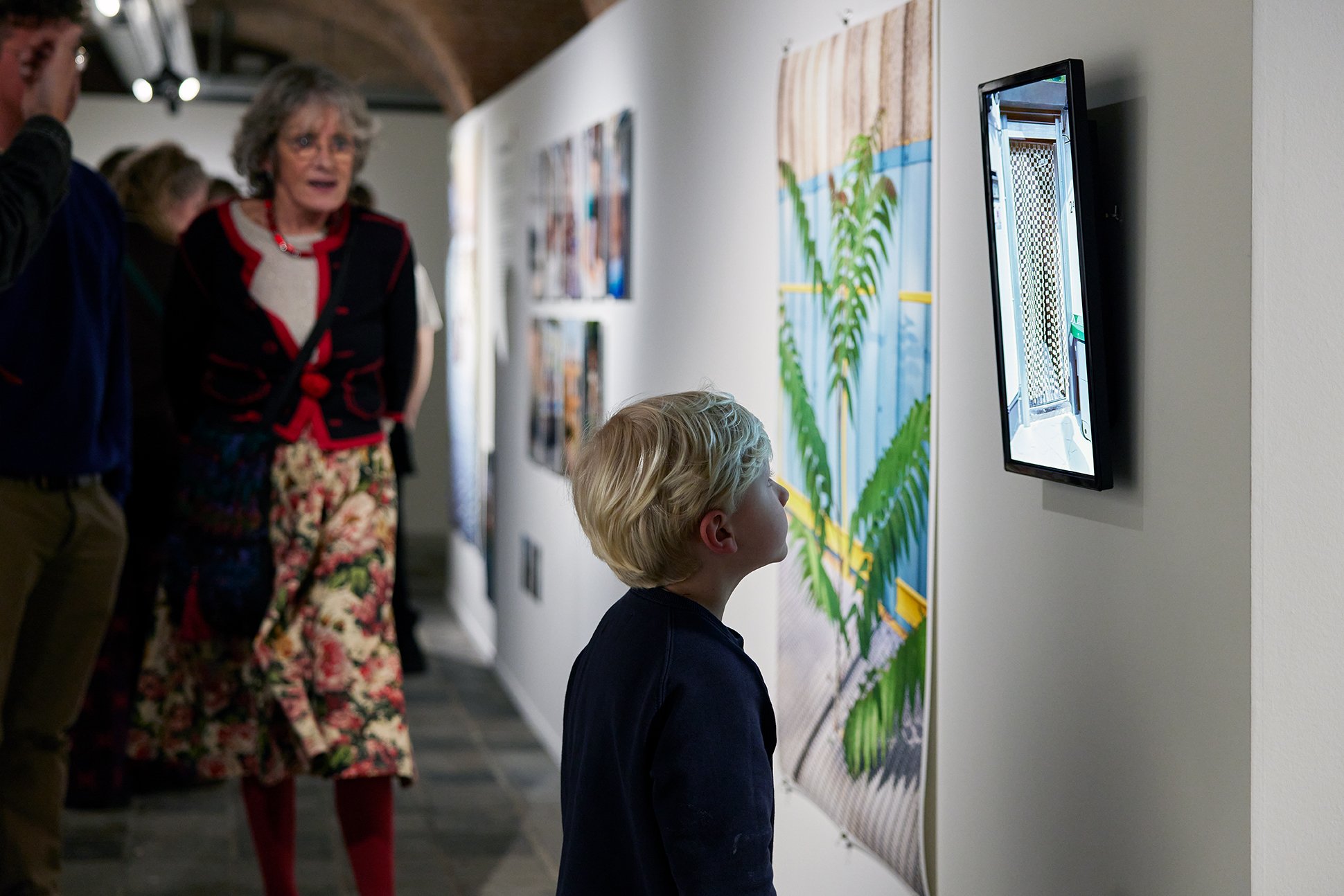
Julia Gat vindt Schiedam een fijne kleine stad, een comfortabele cocon. Zij legde contacten via kinderen, in eerste instantie met als ingang contacten van bestuursleden van het CFS, maar als een olievlek breidde het aantal kinderen dat ze in korte tijd leerde kennen zich organisch uit. Kinderen zijn de toekomt en via hen kun je een stad in transitie leren kennen. Ze fotografeerde kinderen tot en met 14 jaar oud in of om het huis. Hieronder zie je een voorbeeld van een geëxposeerde foto met ervoor de geportretteerde zusjes Elise en Leonoor, die vanmiddag bij de opening aanwezig waren.

Bram Petraeus werkt normaal vooral als fotojournalist. Voor deze opdracht - die hij en de andere twee fotografen van de zomer hebben uitgevoerd - heeft hij meer dan gebruikelijk naar vormen en kleuren gekeken, zegt hij, het werk voor deze expositie is meer poëtisch van aard.


Zijn werkgebied was Nieuwland, een fijne plek, een wijk met een warme uitstraling. We zien een prachtige foto, die ons aan betonstructuren doen denken, maar toch met warme gele kleuren, bij een muur, zie we net een handje uitsteken. Een kinderhand is het. "Nee, niet geposeerd", zegt Bram. Een andere foto die ons opvalt is een toren in de steigers, ingepakt in groenblauw plastic, surrealistisch welhaast, 'een beetje Christo', horen we iemand zeggen. Gewoon een kerktoren in de steigers en plastic, maar de lichtval was prachtig, zegt Bram. Hij was er op het juiste moment, en hij zag het.


De fotografen hebben voordat ze van de zomer aan de slag gingen door middel van een etentje met mensen van het CFS met elkaar kennisgemaakt, maar geenszins afgestemd hoe zij hun opdrachten gingen invullen. "Op voorhand was eigenlijk wel duidelijk dat ons werk van elkaar verschilt, dus afstemmen om tot variatie te komen was absoluut niet nodig. We zijn gewoon los van elkaar ons gang gegaan",  vertelt Bram Petraeus ons tot slot. 

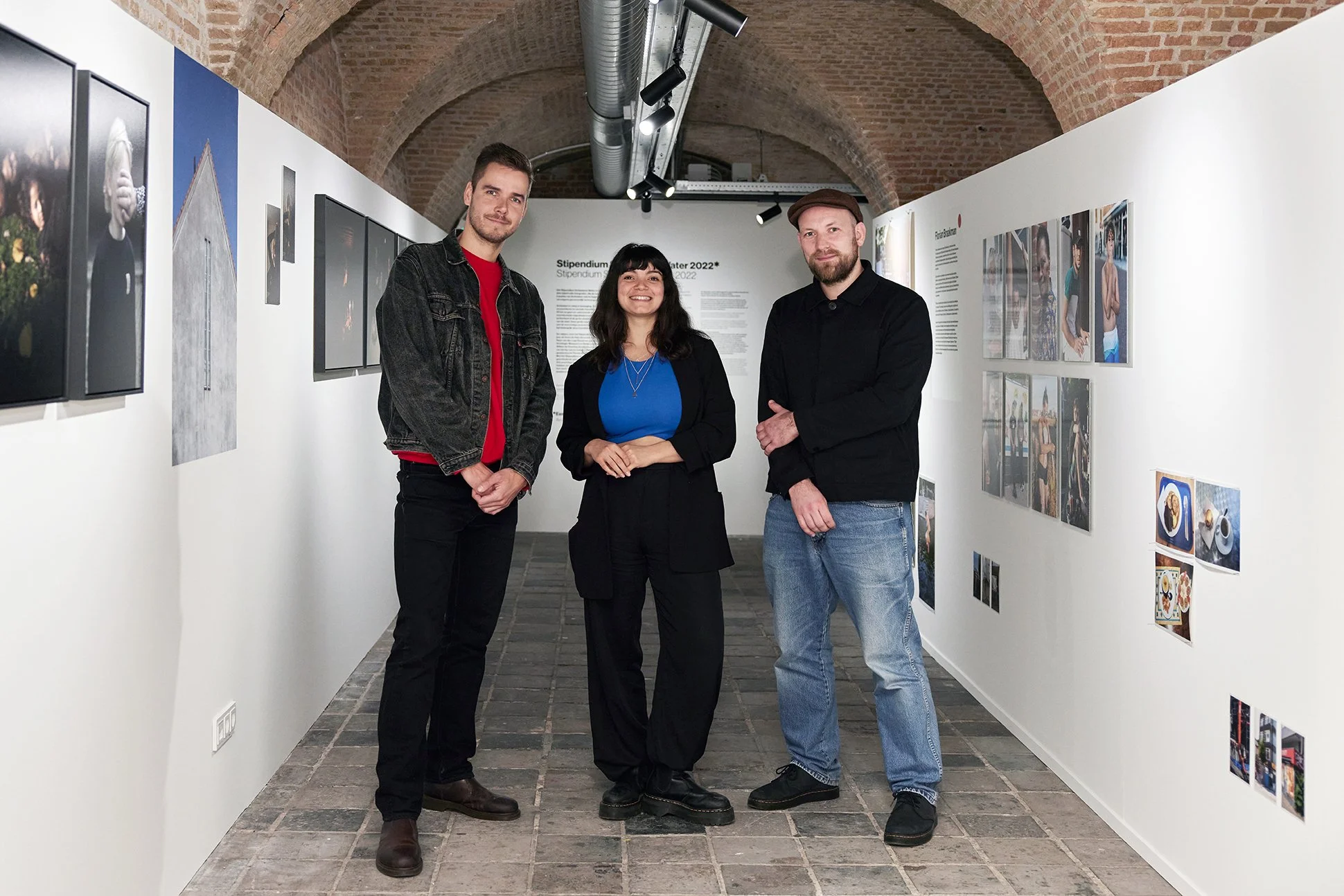
Foto boven het artikel: v.l.n.r. Reyn van der Lugt, Anne de Haij, Bram Petraeus, Florian Braakman, Julia Gat en Rebecca Simons 

Commentary box sports: Three young photographers win Stipendium Schiedams Water

Schiedam – Three talented young photographers have won the Stipendium Schiedams Water Prize 2022; An annual award that enables three photographers to capture the social transformation of Schiedam.

After the previous editions, in which Sigdem Yuksel, Sander van Wittum and Sani Donders, among others, explored the city of Schiedam through their photographic works, this time it is the turn of Julia Gatt, Florian Brackmann and Bram Petraeus. The award has existed since 2020 and is an initiative of the Schiedam Cultural Forum. What is new is that this year the laureates are exhibiting their work at the Stedelijk Museum in Schiedam. The exhibition can be viewed from January 14 to March 6 in the museum’s new City Gallery.

Schiedam is on the move

Schiedam is in full swing. For many centuries, many economic and social transformations have followed one another in quick succession. Be it industries emerging and disappearing, constant migration flows, trade by sea or with the hinterland or great urban expansions on the northern edge of the city. No major social upheaval has passed in Jennifer’s former city. Schiedam, for example, has recently seen a huge influx of newcomers, namely former residents of the big cities in the Randstad finding a home there. Stipendium Schiedams Water aims to capture these social shifts through the lens of its talented photographers. Regardless of the subject matter, the condescension is devoid of form. The three photographers are allowed to create a photographic story about the changes they have observed in the city at their own discretion. Despite the variety in the developments it depicts, there is a common denominator each year. This year, the work of the three photographers is about diversity, connection, rooting, photography, pride, awareness, and strength. It is sometimes viewed from a personal perspective on change, in order to open the door to a broader societal transition.

Professional jury and Stedelijk Museum Schiedam

This year’s Stipendium Schiedams Water jury consisted of: Anne de Haij, director of the Stedelijk Schiedam Museum, Reyn van der Lugt, art collector and former director of the Groninger Museum, and Rebecca Simons, teacher of photography at the Willem de Kooning Academy and curator. They selected three promising photographers from a long list of thirty. An exhibition of the winners’ works has been shown at various locations in Schiedam in recent years. This time the exhibition is in the City Gallery in the Stedelijk Museum Schiedam. Director Anne de Haij: I defined the Stipendium as a prize that invests in talented young artists and connects them to Schiedam through their work. This fits the museum. We also ask the artists to think about the city. That is why I am glad that the fair is being held here this year. Our visitors also get to know the Schiedam (better) through the work of these photographers.” Last year, the museum purchased the work of Cigdem Yűksel’s Schiedamse Families for its collection.

About paparazzi

Julia Gat (Israel, 1997) lives and works in Rotterdam and Marseille. She studied Arts and Humanities at the Open University in the United Kingdom. She then followed art courses at the Willen de Kooning Academy in Rotterdam and the School of Visual Arts in New York. She also takes pictures and makes videos. Her work ranges from documentaries to vertical video art, in search of interaction between people. She has received several awards for her work, such as Steenbergen Stipendium Audience Award 2021, ISEM Young Photographer in 2020 and French Prix Polyptyque in 2022.

Florian Brackmann (Netherlands, 1988) studied photonics at Eide and then photography at the Royal Academy of Arts in The Hague. After his education he settled in Rotterdam Delphshavn, in the Bospolder Tossendigken district. Out of a fascination with the multicultural society of West Rotterdam, he decided to photograph fellow residents for his project Delfshaven’s Finest (2013–present). For his series Broer (2017-present) depicting street culture and for the slide installation In Between Homes (2017-present) Brackmann travels with locals back to their homeland.

Bram Petraeus (Netherlands, 1987) studied photonics at Eddy. He lives in Amsterdam and works for NRC Handelsblad, Trouw newspaper, UWV and more. He is represented by Hollands Hugt and ANP. Petraeus has won various awards, such as De Zilveren Camera in 2022 (1st prize in the Art, Culture and Entertainment category) and 2017 (3rd prize in the National News category). He was also a finalist in the Brussels Street Photography Competition (2017).

City fair

The exhibition containing the works of the Stipendium winners can be seen in the City Gallery at the Stedelijk Museum Schiedam. This is a special room in the museum where exhibitions created with the Schiedammers can always be viewed. Stipendium Schiedams Water is an initiative of the Schiedammers and is about the social transformation of the city. Cultural Forum Schiedam knocked on the museum’s door a year ago to collaborate, and that has now led to the Stipendium Schiedams Water 2022 exhibition with works by Gat, Braakman and Petraeus.

Estelle allen

Schiedam 24: Drie jonge fotografen winnen Stipendium Schiedams Water

SCHIEDAM - Drie jonge talentvolle fotografen hebben het Stipendium Schiedams Water 2022 gewonnen; een jaarlijkse prijs die drie fotografen in staat stelt om de sociale transitie van Schiedam te verbeelden.

Na eerdere edities, waarbij onder anderen Cigdem Yűksel, Sander van Wettum en Sanne Donders de stad Schiedam via hun fotografisch werk verkenden, is het ditmaal de beurt aan Julia Gat, Florian Braakman en Bram Petraeus. De prijs bestaat sinds 2020 en is een initiatief van Cultureel Forum Schiedam. Nieuw is dat de winnaars dit jaar hun werk tonen in het Stedelijk Museum Schiedam. Van 14 januari tot en met 6 maart is de tentoonstelling te zien in de nieuwe Stadsgalerij van het museum.

Schiedam is in beweging 

​Schiedam is volop in beweging. Al eeuwenlang volgen vele economische en sociale transities elkaar in rap tempo op. Of het nu gaat om opkomende en verdwijnende industrieën, voortdurende migratiestromen, handel over zee of met het achterland of de grote stadsuitbreidingen aan de noordrand van de stad. Geen grote maatschappelijke omwenteling gaat aan de voormalige jeneverstad voorbij. Recent ziet Schiedam bijvoorbeeld een grote instroom van nieuwkomers, namelijk voormalige inwoners van grote steden in de Randstad die er een woning vinden. Het Stipendium Schiedams Water wil deze sociale transities vastleggen via de lens van talentvolle fotografen. De opdracht is - behalve het onderwerp - verder vrij van vorm. De drie fotografen mogen naar eigen inzicht een fotografisch verhaal maken over veranderingen die zij waarnemen in de stad. Ondanks de verscheidenheid in ontwikkelingen die zij verbeelden, is er elk jaar weer een gemene deler. Dit jaar gaat het werk bij alle drie de fotografen over diversiteit, verbinden, wortelen, beeldvorming, trots, bewustwording en kracht. Soms gezien vanuit een persoonlijk perspectief op verandering, om zo een deur te openen naar bredere maatschappelijke transitie.  

Vakjury en Stedelijk Museum Schiedam 

​De jury voor het Stipendium Schiedams Water bestond dit jaar uit: Anne de Haij, directeur Stedelijk Museum Schiedam, Reyn van der Lugt, kunstverzamelaar en oud-directeur Groninger Museum en Rebecca Simons, docent fotografie Willem de Kooning Academie en curator. Uit een longlist van dertig fotografen hebben zij drie veelbelovende fotografen geselecteerd. De tentoonstelling met het werk van de winnaars is de afgelopen jaren op verschillende locaties in Schiedam te zien geweest. Dit keer is de tentoonstelling in de Stadsgalerij van Stedelijk Museum Schiedam. Directeur Anne de Haij: ‘Ik heb het Stipendium leren kennen als een prijs die investeert in jonge, talentvolle kunstenaars en hen via hun werk verbindt aan Schiedam. Dat past bij het museum. Ook wij vragen kunstenaars te reflecteren op de stad. Daarom ben ik blij dat de tentoonstelling dit jaar hier plaatsvindt. Onze bezoekers leren bovendien via het werk van deze fotografen Schiedam (beter) kennen.” Vorig jaar kocht het museum het werk Schiedamse families van Cigdem Yűksel aan voor de collectie. 

​Over de fotografen

Julia Gat (Israël, 1997) woont en werkt in Rotterdam en Marseille. Ze studeerde kunst en geesteswetenschappen aan de Open Universiteit in het Verenigd Koninkrijk. Daarna volgde zij kunstopleidingen aan de Willen de Kooning Academie in Rotterdam en The School of Visual Arts in New York. Ze fotografeert en maakt ook video’s. Haar werk varieert van documentaires tot portretvideokunst, waarbij ze op zoek gaat naar interactie tussen mensen. Ze heeft diverse prijzen voor haar werk gekregen, zoals de Steenbergen Stipendium Publieksprijs 2021, de ISEM Young Photographer in 2020 en de Franse Prix Polyptyque in 2022.

​Florian Braakman (Nederland, 1988) volgde een opleiding Fotonica in Ede en daarna de opleiding Fotografie aan de Koninklijke Academie voor Beeldende Kunsten in Den Haag. Na zijn opleiding vestigde hij zich in Rotterdam Delfshaven, in de wijk Bospolder Tussendijken. Uit fascinatie voor de multiculturele samenleving van Rotterdam West besluit hij voor zijn project Delfshaven’s Finest (2013- heden) zijn medebuurtbewoners te fotograferen. Met de serie Broer (2017- heden) brengt hij de straatcultuur in beeld en voor de dia-installatie In Between Homes (2017- heden) reist Braakman met buurtbewoners naar hun vaderland. 

​Bram Petraeus (Nederland, 1987) studeerde Fotonica in Ede. Hij woont in Amsterdam en werkt onder meer voor NRC Handelsblad, dagblad Trouw en het UWV. Hij wordt vertegenwoordigd door Hollandse Hoogte en ANP. Petraeus won diverse prijzen, zoals De Zilveren Camera in 2022 (1e prijs in de categorie Kunst, cultuur en entertainment) en 2017 (3e prijs in de categorie Nationaal Nieuws). Ook was hij finalist voor de Brussels Street Photography Contest (2017).

​Stadsgalerij

​De tentoonstelling met werk van de winnaars van het Stipendium is te zien in de Stadsgalerij van het Stedelijk Museum Schiedam. Dit is een speciale ruimte in het museum waar altijd tentoonstellingen te zien zijn die samen met Schiedammers tot stand zijn gekomen. Het Stipendium Schiedams Water is een initiatief van Schiedammers en gaat over de sociale transitie van de stad. Cultureel Forum Schiedam klopte een jaar geleden aan bij het museum voor een samenwerking, en dit leidt nu tot de tentoonstelling Stipendium Schiedams Water 2022 met werk van Gat, Braakman en Petraeus.

L'oeil de la photographie: 40 ans de Photo Poche à Paris Photo

Photo Pochela plus vieille et prestigieuse édition de poche consacrée à la photographie, fête ses 40 ans en grande pompe, avec un ensemble de signatures sur son stand pendant Paris Photo. Rendez-vous sur le stand E8 du mercredi 09 au dimanche 13 novembre, 2022.

 Jeudi 10 novembre de 17h à 18h
Jean-Luc Bertini, Américaines solitudes

Jeudi 10 novembre de 18h à 20h
Olivier Christinat, Pas un jour sans une nuit (Prix Alfred Latour)
Sabine Hertig, L’Espace des fragments (Prix Alfred Latour de l’éveil)

Vendredi 11 novembre de 13h à 15h
Harry Gruyaert, Photo Poche n°108
Stéphan Gladieu (photographies) et Wilfried N’Sondé (texte), Homo Détritus

Vendredi 11 novembre  de 15h à 16h30
Sabine Hertig, L’Espace des fragments (Prix Alfred Latour de l’éveil)

Vendredi 11 novembre de 16h30 à 17h30
Sophie Calle, Photo Poche n°101

Vendredi 11 novembre de 17h à 18h30
Joan Foncuberta, Manifeste pour une post-photographie

Vendredi 11 novembre de 17h30 à 19h
Julia Gat, khamsa, khamsa, khamsa

Samedi 12 novembre de 13h à 14h30
Florencia Grisanti et Tito Gonzalez Garcia, Forêts géométriques

Samedi 12 novembre de 14h30 à 16h
Nathalie Koenig (photographies) et Blaise Hofmann (textes), Courir après la pluie

Samedi 12 novembre de 16h à 18h
Klavdij Sluban, Photo Poche n°169

Samedi 12 novembre de 18h à 20h
Stefania Rousselle, Amour 

La repubblica : Un'altra scuola è possibile

"Pensare che l’apprendimento possa accadere solo nel chiuso delle quattro mura è miope". Alla vigilia del ritorno in classe, Rachele Furfaro, un’insegnante illuminata, racconta il suo diverso modello educativo messo in pratica a Napoli nei Quartieri Spagnoli

C’è una scuola in cui il primo giorno i bambini vengono accolti sedendosi in cerchio per terra e cantando insieme in una lingua sconosciuta. Canti africani, norvegesi o degli indiani d’America. Poi un insegnante racconta loro una storia. E dopo li invita a disegnare quello che hanno imparato. Una scuola dove i bambini intessono fitte corrispondenze con Dante e Calvino, ricevono poesie da Baudelaire, Neruda, Hikmet e disegni da Kandinskij, Mondrian, Rauschenberg.

La repubblica : Julia Gat: "Vi racconto cos'è l'unschooling"

"Ogni bambino è diverso e impara ciò che ama", così la fotografa sintetizza questa filosofia popolare in Israele che non si basa su un curriculum scolastico predefinito, ma sull’interesse del bambino. Fino ai 7 anni lei e i suoi fratelli sono stati lasciati liberi di giocare come volevano poi hanno seguito questo metodo che lei ci spiega anche attraverso le sue foto

Julia Gat, 25 anni, fotografa, autrice delle immagini pubblicate in queste pagine, è nata in Israele ma vive in Francia. Lei e i suoi quattro fratelli hanno avuto un’educazione davvero inusuale. I genitori, un’artista e un coreografo, hanno seguito l’unschooling, una filosofia popolare in Israele che non si basa su un curriculum scolastico predefinito, ma sull’interesse del bambino. Fino ai 7 anni lei e i suoi fratelli sono stati lasciati liberi di giocare come volevano, poi hanno seguito un programma di attività deciso di anno in anno e di settimana in settimana e intorno ai 14 anni hanno iniziato a specializzarsi.

Da quando aveva 13 anni Julia ha mostrato un desiderio intenso di fotografare e Khamsa, Khamsa, Khamsa, il nome di questo progetto, racconta l’atmosfera fiabesca di questa famiglia. Khamsa in arabo è il 5 – come il numero dei fratelli Gat – ma anche la mano di Fatima, l’amuleto comune nel Medio Oriente. Ripetuta tre volte forma un cerchio magico che tiene lontano il malocchio. Ora i suoi lavori sono in mostra alla Galerie Huit Arles e Les Rencontres D’Arles, fino al 25 settembre.

Che cosa si fa durante il giorno in una unschool?
«Disegno, pittura, ceramica, circo, danza, cavallo, sport e tante altre cose che in una scuola normale si fanno dopo la scuola. Io ero la più grande e mi prendevo cura dei miei fratelli. Ovviamente abbiamo anche imparato a leggere e scrivere, ma ognuno di noi a un’età diversa. Io verso i 3-4 anni, uno dei miei fratelli verso gli 8-9. C’erano anche momenti vuoti, di noia e allora dovevamo decidere che cosa fare. Si accendeva così la scintilla. Questo ci ha responsabilizzato. È stato un percorso di iniziazione che ha richiesto molta fiducia nei ritmi di ciascun bambino: se desidera imparare qualcosa, vuol dire che ne ha davvero bisogno». 

Come è diventata fotografa?
«Con due genitori artisti era difficile non seguire le loro orme. C’erano sempre macchine fotografiche in giro per casa e ho iniziato prestissimo a scattare i miei fratelli. Quando a 13 anni ho detto a mia madre che avrei fatto quello, lei mi ha spronato ad aprire un blog che è diventato un archivio di quello che facevo. Ho preso la cosa sul serio e col tempo ho partecipato a workshop, internship, ho lavorato in gallerie».

Com’è stato il passaggio all’università?
«Onestamente non difficile. Ho fatto Arts and Humanities alla Open University e poi, a 21 anni, ho studiato arte all’Academy di Rotterdam per tre anni».
Le è mancata la scuola tradizionale?
«L’ho frequentata per un anno, ma mi sono resa conto che non faceva per me. È come se si chiedesse a un elefante, una scimmia e un pesce di arrampicarsi su un albero e poi li si giudicasse su quello. Non siamo uguali, non funzioniamo alla stessa maniera, ma tutti possiamo contribuire in modo diverso alla nostra società».

Dopo essersi trasferita in Francia da Israele con i suoi 4 fratelli, Julia Gat ha studiato in casa parlando ebraico, inglese e francese. 10 anni fa, ne aveva solo 15, ha iniziato Khamsa Khamsa Khamsa, il progetto fotografico da cui sono tratte le foto presenti in questo articolo.

blind magazine : A New Season in Photography at Polyptyque Marseille

It felt good to be in Marseille, on a sunny day in late August. The city had just put on its back-to-school outfit; and this also means the return of the Art-O-Rama, Paréidolie, and Polyptyque art fairs, dedicated, respectively, to contemporary art, drawing, and photography. We walk through the Polyptyque, with a detour via the Thomas Mailaender exhibition at the Centre Photographique Marseille.

The three fairs, Art-O-Rama, Paréidolie, and Polyptyque, make Marseille an unmissable late summer destination, as many collectors end their vacation in the region or take a special trip. All three events are on a human scale, facilitating contacts between visitors, galleries, and artists. Polyptyque, the most recent addition, was created four years ago by Erick Gudimard, director of the Centre Photographique Marseille (CPM). Small size goes here hand in hand with high quality. The show is divided between six galleries (including one joint project), each showcasing an artist, plus an exhibition bringing together eleven photographers longlisted among 54 submissions for the Polyptyque Award. Three winners were designated by a prestigious jury* on August 26. 

What is special about this award? It is aimed at photographers living in Région Sud (Provence-Alpes-Côte d’Azur), who do not have a gallery. The idea is to support local artists who have limited contact with the art market in order to boost their visibility, explained Erick Gudimard. “This is the third time that I participate in the jury, and I have noted the fair is getting stronger every year. The submissions are top-notch and represent a wide variety of practices. This makes it possible to make some wonderful discoveries,” says Caroline Stein, philanthropy manager at Neuflize OBC, which celebrates this year the twenty-fifth anniversary of its support for artists and institutions in the field of visual arts. 

The three winners of the 2022 Polyptyque Award are Julia Gat, Andrea Graziosi, and Jeanne et Moreau. Among them, special mention goes to the duo Jeanne and Moreau (Lara Tabet and Randa Mirza) whose installation brings together photographic prints, a print on fabric, a print on broken glass installed on the floor, and an old photo album containing their own images which the visitor is invited to consult. The whole tells the story of the couple’s life following the destruction of their apartment in the Beirut harbor explosion in August 2020. In his series Animas, the Italian photographer Andrea Graziosi in turn presents an astonishing gallery of portraits of dark and disturbing, half-human/half-animal masked creatures that hark back to the ancestral traditions of the Barbagia region in central Sardinia. Graziosi adopts a documentary stance even as he gives free rein to his imagination.

The larger exhibition brings together six French galleries and one German. As Erick Gudimard tells us, “participation is free in return for a small percentage of sales. It is an exchange of good practices: the galleries bring us their skills and their advice by supporting us in promoting the award-winning artists.” Among the exhibitors, special mention goes to Céline Croze featured by the Sit Down Gallery (Paris). In her work on Caracas, Crozier transcribed her nocturnal wanderings around the Venezuelan capital using a cinematographic style in shades of sepia. This series will be presented this fall at the Festival du Regard, with the overarching theme of the night (from October 14 to November 27, 2022 in Cergy-Pontoise).

Another discovery to keep an eye on is Guénaëlle de Carbonnières, showcased by the Binome (Paris) and Françoise Besson (Lyon) galleries. Through works from four recent series, the artist explores the themes of heritage and archaeology using different processes that combine digital and analog photography, engraving, drawing, etc. Whether the final result is prints—as in the series Submergées [Submerged], Cités englouties [Sunken Cities], or Creuser l’image [Deeper into the Image]—or objects where the negatives are sealed in resin—as in the series Fossil—de Carbonnières questions our relationship to history and memory, and turns the notion and status of the document on its head.

One should not leave Marseille without seeing Thomas Mailaender’s exhibition at the Centre Photographique. Here, too, we encounter the unusual and the unexpected, two signature concepts of the Centre. The place has been made unrecognizable by the installations, notably a giant greenhouse, cyanotypes made directly on the walls using tanning lamps bought on Leboncoin along with the magazines from which the images are taken. A free spirit, Thomas Mailaender has fun with serious things, experimenting with recycled materials, calling on fine arts students to assist in this production in the Centre’s spirit of participation … The tour ends at a sort of an artist’s studio where, on a large table, are a jumble of works-in-progress fashioned from cult books on the history of the medium. A visit full of twists and turns!

4th edition of Polyptyque, August 27 to September 10, 2022. 3, rue Henri Fiocca, 13001 Marseille, France.

Thomas Mailaender, Lumière passion. May 27 to September 24, 2022, Centre Photographique Marseille (CPM). 74 rue de la Joliette, 13002 Marseille, France.

* Jury: Pascal Beausse, head of the photography collection at the CNAP; Françoise Bornstein, director of the Sit Down Gallery (Paris); Florence Bourgeois, director of Paris Photo; Pascal Neveux, director of the FRAC Picardie Hauts-de-France, president of the CIPAC; Alexander Sairally and Esther Schulte, directors of the Drawing Room Gallery (Hamburg); Caroline Stein, philanthropy manager and curator at the Neuflize OBC Bank collection. 

idboox : Khamsa Khamsa Khamsa – 5, 5, 5 les photos qui protègent

L’exposition Khamsa Khamsa Khamsa est actuellement présentée à la Galerie Huit à l’occasion des Rencontres de la photographie d’Arles.

Khamsa Khamsa Khamsa (Actes Sud) c’est aussi un livre discret et poignant où Julia Gat raconte son enfance et celle de ses sœurs et frères. En quelques photographies, elle qui décida à 10 ans de ne jamais oublier le regard de l’enfant, elle pose ses photos comme une protection.

Khamsa veut dire 5 en arabe. Répété trois fois c’est un mantra qui invoque la protection de celles et ceux qu’on aime. Les juifs aussi reprennent cette incantation qu’on signifie par les mots ou le geste en posant 3 fois la main sur la tête des êtres chéris.

Julia a grandi dans une « bulle » ses parents étant adeptes de « l’instruction en famille » elle n’a jamais été à l’école mais n’a pas pour autant rien appris. Aujourd’hui elle est photographe.

Au travers de son objectif elle dégage une puissance folle nous permettant de rencontrer sa famille au fil du temps mais aussi de nous interroger sur nos propres vies.

Concept ovni me direz-vous, peut-être, mais le grand angle de vie proposé par Julia Gat ne doit pas être balayé du revers de la main. Au contraire, on l’accueille avec bienveillance, on respecte son rôle protecteur et pacifique. 5,5,5 sur ceux qu’on aime !
Pour vous procurer le livre Cliquez ici Cliquez ici
Découvrez d’autres beaux livres d’art ici

l'oeil de la photographie : Polyptyque : Julia Gat : khamsa khamsa khamsa

Khamsa khamsa khamsa—“five” in Arabic, repeated three times like a protective incantation—is an autobiographical visual narrative in the form of a family archive. At first glance, Gat tells the story of her childhood and adolescence growing up with alternative educational methods, with portraits of her siblings, friends and domestic scenes. However, underneath these family album-like images, a photographer’s writing emerges. Gat tells her story by gradually defining her way of capturing the faces and growing bodies of those around her, often in peaceful Mediterranean landscapes. “When I was ten, I promised myself never to forget how children see the world,” she says. “Everything is new. Imagination blends with reality and the unknown is exciting.” Documenting her everyday life is the running thread of the artist’s work, allowing her to connect the adult photographer to her child sensibility.